Lambent · Exhibition 07
Afterlight
A record of one evening, read from west to east — from the last gold to the first true dark.
Scroll down · the room moves sideways
Lambent · A moving essay
Six studies in the vanishing of day — the twenty-two minutes between sun and dark.
Lambent · Exhibition 07
A record of one evening, read from west to east — from the last gold to the first true dark.
Scroll down · the room moves sideways
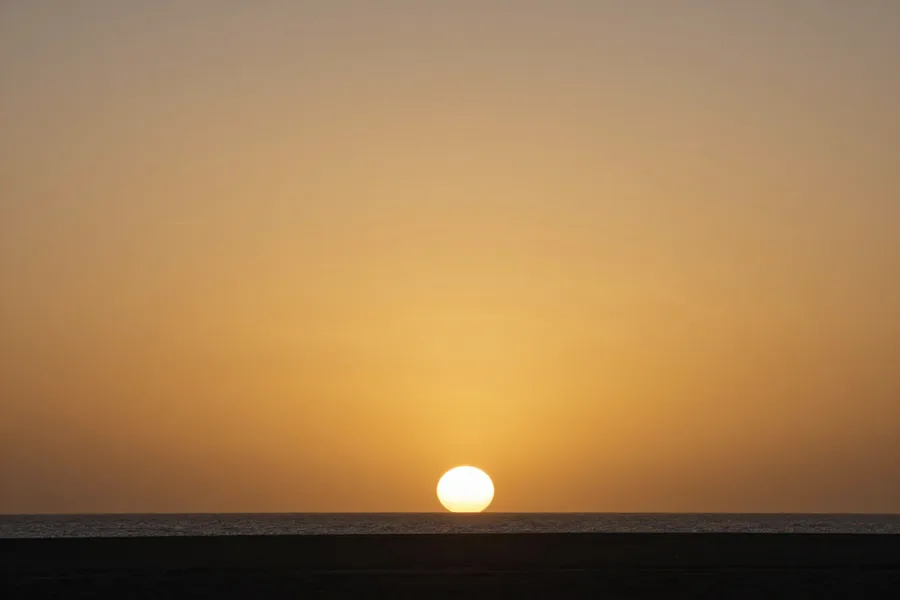
01 — 18:41 · Sun +4°
Held just above the horizon, the sun's light crosses the greatest possible depth of atmosphere. The short wavelengths scatter away and leave the world in a low, forgiving amber — the hour architects borrow to make ordinary rooms look kind.
Colour temperature ≈ 3,500 K
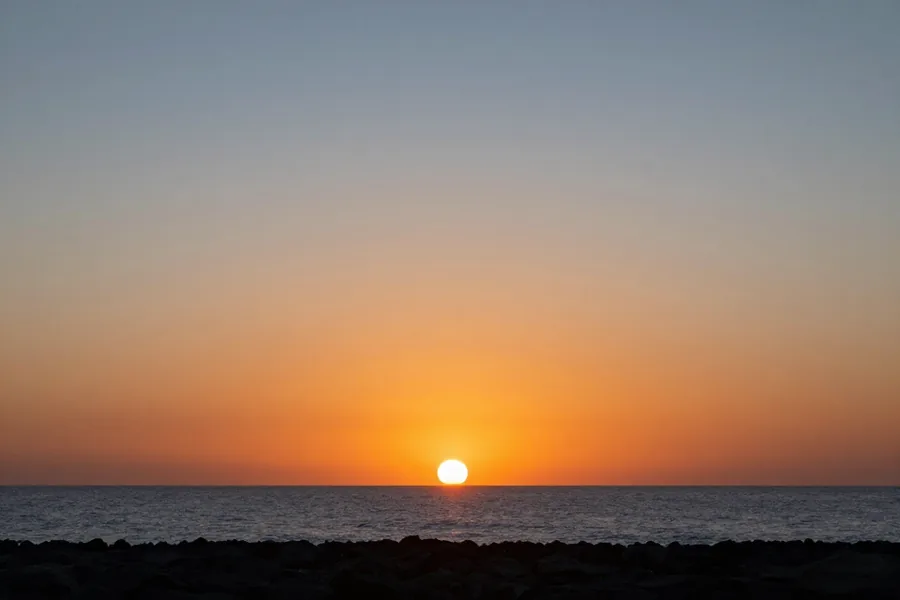
02 — 19:07 · Sun −2°
The disc is gone, yet there is light enough to read by and to name a colour without doubt. Cities hesitate before the switch; the first windows warm while the sky keeps its last clean blue. This is the threshold the almanacs still call day.
Horizon — sharp
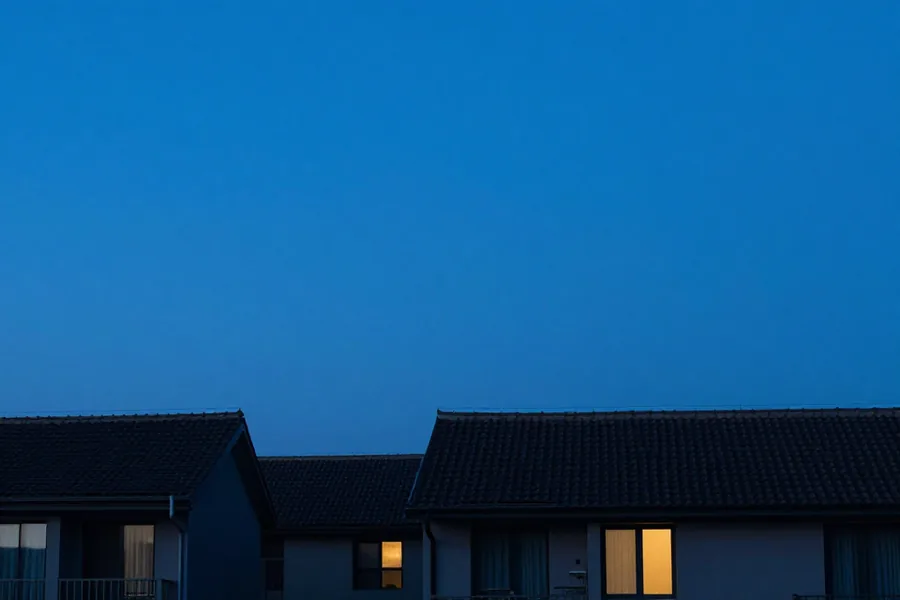
03 — 19:19 · L'heure bleue
For twenty saturated minutes the sky turns a deep, even cobalt and every artificial light finds its exact opposite. Photographers wait all day for this balance — the one moment when the lamp inside and the dusk outside weigh precisely the same.
Sun −5° · equal weight
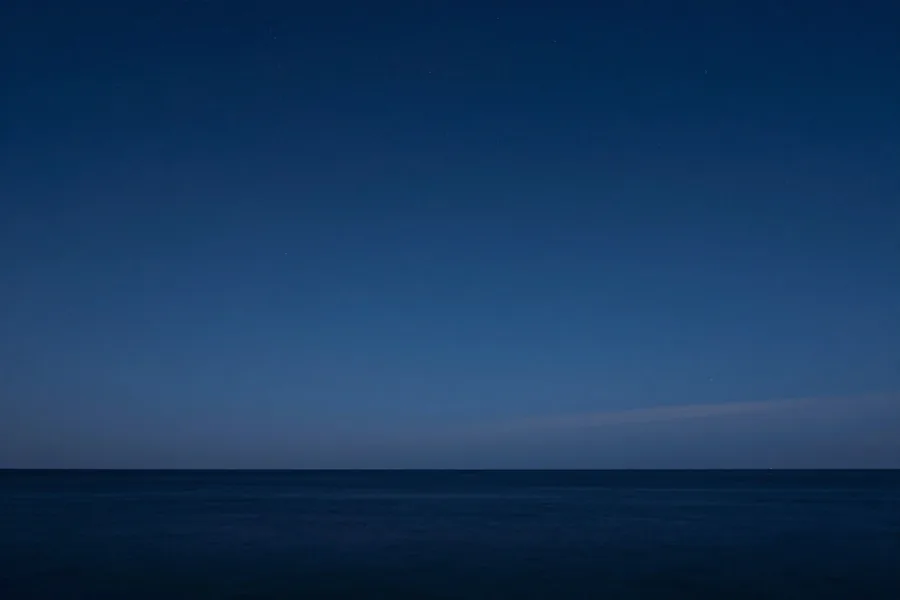
04 — 19:44 · Sun −9°
Only the brightest stars have arrived, and the horizon still draws a faint, certain line between sea and sky. For three centuries this was the sailor's window — dark enough for stars, light enough to hold a sextant against the edge of the world.
Horizon — last visible
05 — 20:12 · Sun −18°
No trace of the sun remains, even to an instrument. The sky reaches its true black and the faintest catalogued stars step forward. Day has not merely ended; it has become measurable in its absence. The exhibition closes here, in full dark.
End of light
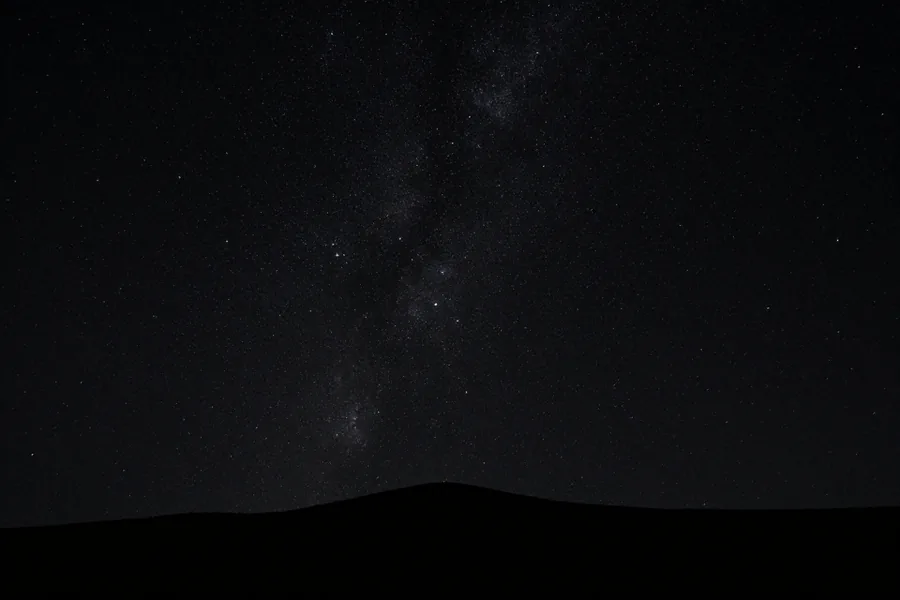
After the dark
Afterlight was measured, not invented — every angle in these six studies is real for a single autumn evening at forty-one degrees north. What the exhibition adds is only tempo: the west edge of the sky, unrolled sideways, so that a fall of light you would normally miss takes the length of a scroll to pass.